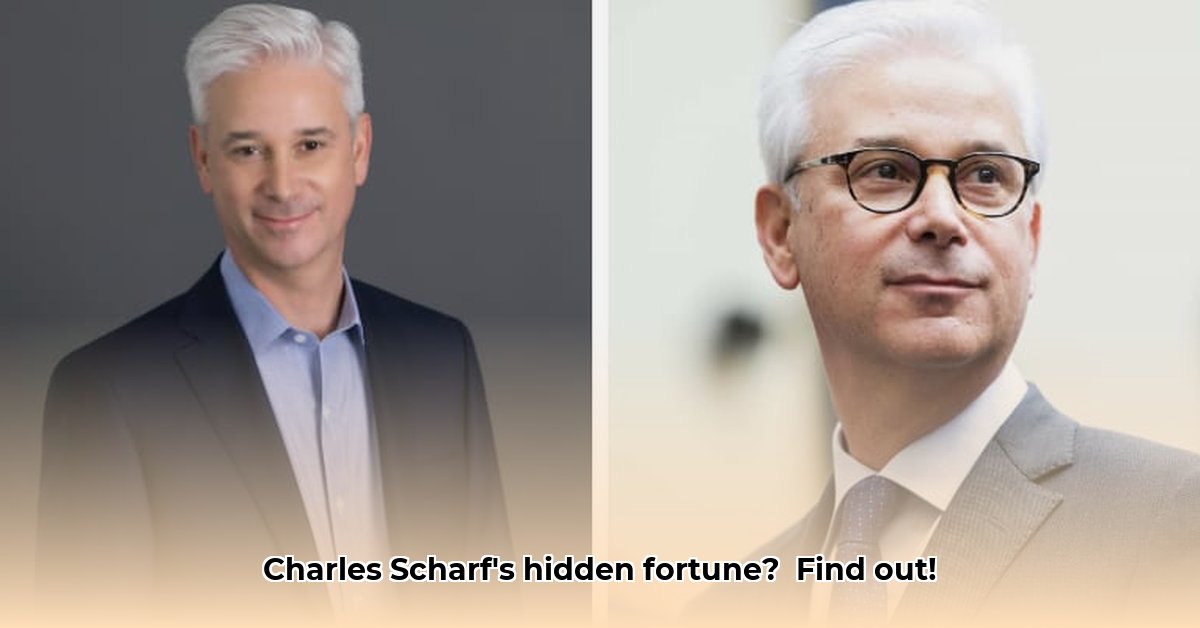
Charles W Scharf's Career Trajectory: From Visa to Wells Fargo
Charles Scharf's career in finance is a compelling narrative of ambition, strategic acumen, and controversy. His journey from relatively humble beginnings to leading some of the world's largest financial institutions – Visa, Bank of New York Mellon, and currently Wells Fargo – is marked by a consistent pattern: aggressive restructuring, cost-cutting, and a focus on maximizing shareholder value. But this approach has not been without its critics and ethical considerations, raising important questions about the intersection of corporate success and social responsibility. His impressive compensation packages at each stop, culminating in a reported $31.2 million in 2024 alone at Wells Fargo, only amplify these discussions. How much is he worth? That's a question we aim to explore while painting a full picture of his professional life.
Strategic Restructuring and Profitability: A Double-Edged Sword
Scharf's reputation precedes him. He’s recognized as a highly effective executive skilled in boosting the bottom line – often through significant restructuring and cost-cutting measures. This approach, while demonstrably successful in improving profitability and share prices at previous firms, has come under fire for its potential human cost, particularly in terms of job losses. It's a recurring theme throughout his career: a relentless pursuit of efficiency that often clashes with the human cost of job displacement. This raises a question for many: Does the improved financial performance sufficiently offset the human impact of such drastic measures?
He's not just a manager; he's a corporate architect, expertly dismantling and rebuilding financial institutions to optimize their performance. Yet, this architectural prowess often involves the demolition of existing structures, impacting thousands of employees. The financial benefits are clear, but the questions about ethical considerations linger.
Wells Fargo: A Test of Leadership
Scharf's appointment as CEO of Wells Fargo in 2019 presented a unique challenge. The bank was reeling from previous scandals, facing regulatory scrutiny, and struggling to regain public trust. His arrival promised a turn-around; a strategic overhaul aimed at restoring financial stability. It proved partially successful. The bank saw improved financial results, including the lifting of the Federal Reserve's asset cap. This clearly bolstered shareholder confidence and, in turn, his own compensation. However, the very methods that had served him so well previously sparked fresh controversies.
Specifically, his comments regarding the scarcity of qualified Black candidates for leadership roles raised serious questions about diversity and inclusion, casting a long shadow over his achievements. This ignited a powerful debate, highlighting the complexities of achieving both financial success and fostering a genuinely equitable work environment. Was the cost of his success too high, even without accounting for financial losses? This remains a crucial question for understanding his legacy and assessing the true value of his leadership.
Estimating Charles Scharf's Net Worth: A Complex Calculation
Determining Charles Scharf’s exact net worth is impossible without access to his personal financial details. However, considering his substantial salaries, potential stock options, and likely personal investments, a reasonable estimate places his net worth in the tens or even hundreds of millions of dollars. This estimate, however, is merely a quantitative approximation. It doesn't fully capture the nuances of his career, nor does it fully account for the ethical complexities that have surrounded his successes.
Diverse Stakeholder Perspectives: Assessing the Impact
To understand the totality of Scharf's impact, we must consider multiple perspectives:
- Shareholders: Prioritize short-term profits and long-term share growth, focusing on immediate returns on investment.
- Employees: Concerned with job security, fair compensation, and opportunities for growth; deeply affected by restructuring.
- Regulators: Focus on compliance, risk management, and ethical conduct within the financial institution.
- Competitors: Observing Wells Fargo's performance under Scharf’s leadership and adapting their own strategies accordingly.
Each of these perspectives offers a different lens through which to view his successes and failures. A holistic understanding requires acknowledging these diverse viewpoints.
The Future of Scharf's Legacy: Navigating Risks and Rewards
Charles Scharf's future, and the ultimate assessment of his legacy, remains unwritten. He continues to navigate a challenging landscape of regulatory scrutiny, ethical concerns, and the ongoing need to balance profitability with the well-being of Wells Fargo's employees and the broader community. The eventual assessment of his career will go beyond a simple calculation of his net worth. It will involve a comprehensive examination of his choices and their societal repercussions. His story serves as a case study reflecting the complexities of leadership in the modern financial world.